Amazon cattle going to a ‘Green’ JBS meatpacking plant come from farms with enough deforestation to cover Paris
New investigation reveals the multinational’s facility in Tucumã, Pará, purchased cattle from areas with 12,900 hectares of deforestation; JBS and its investors will face charges in four European countries
Adriano Wilkson (text) and Raimundo Paccó (photos), Branco River, Tucumã, Amazon. With contributions from Fábio Bispo – November 5, 2026
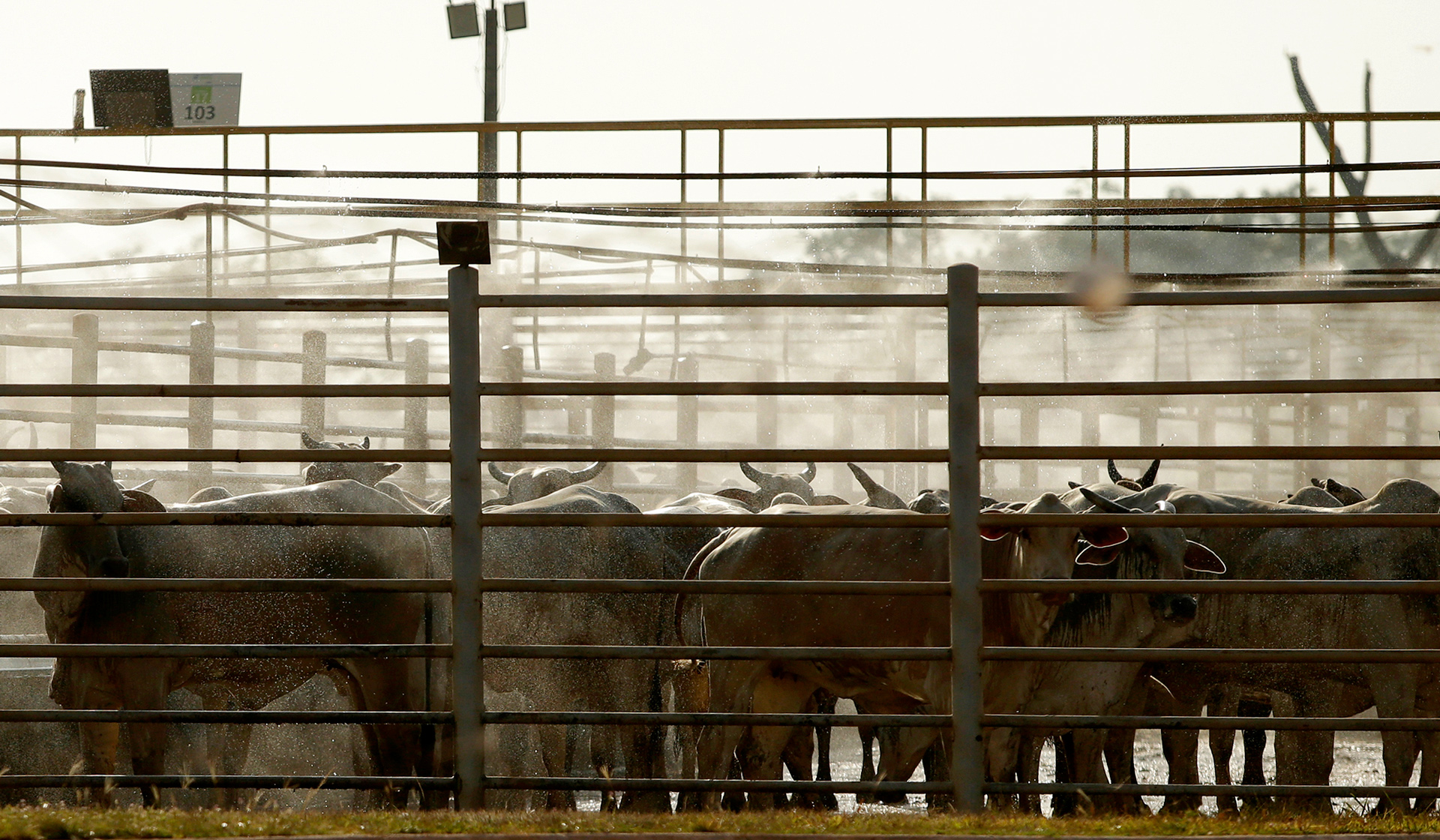
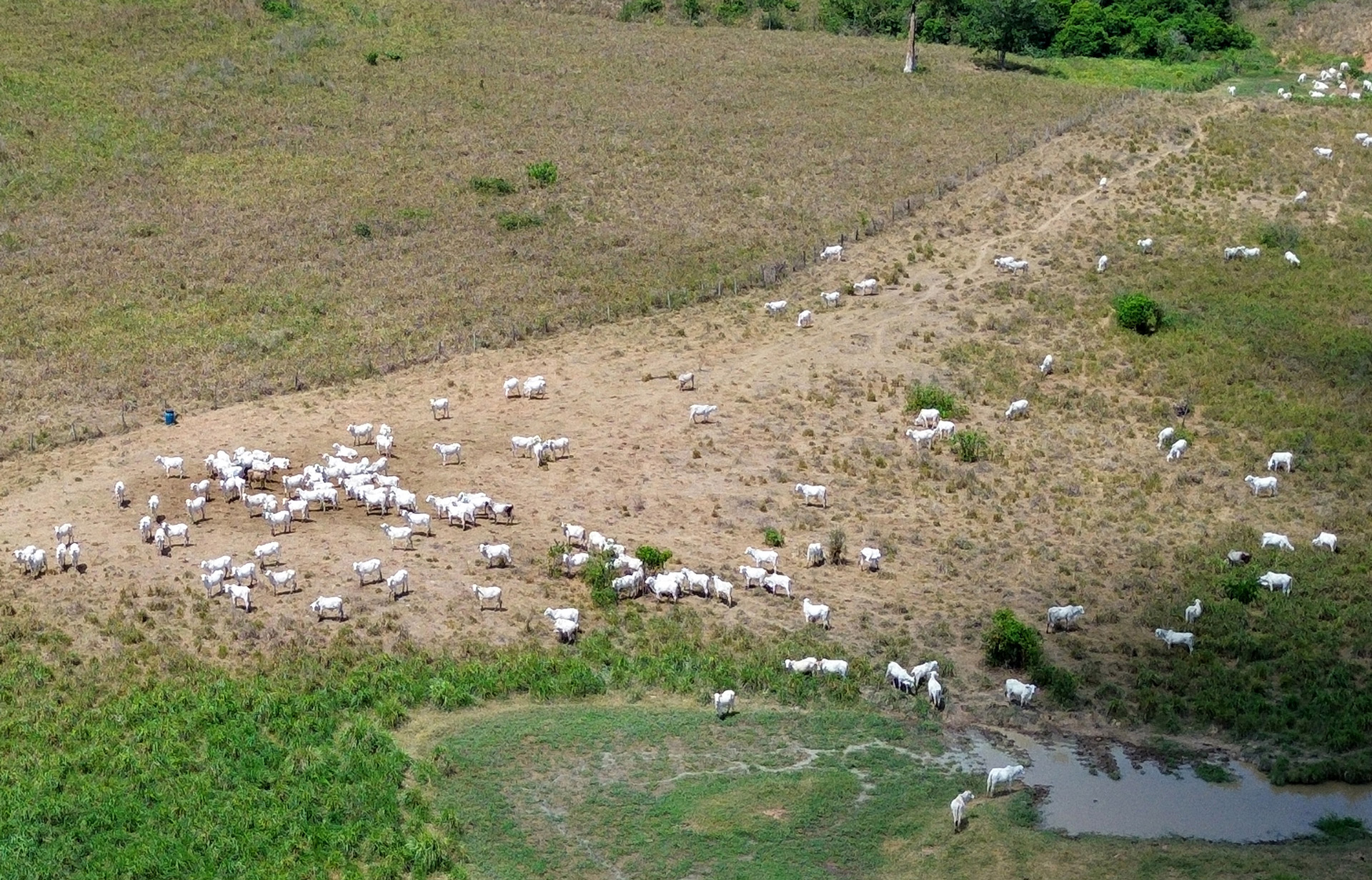
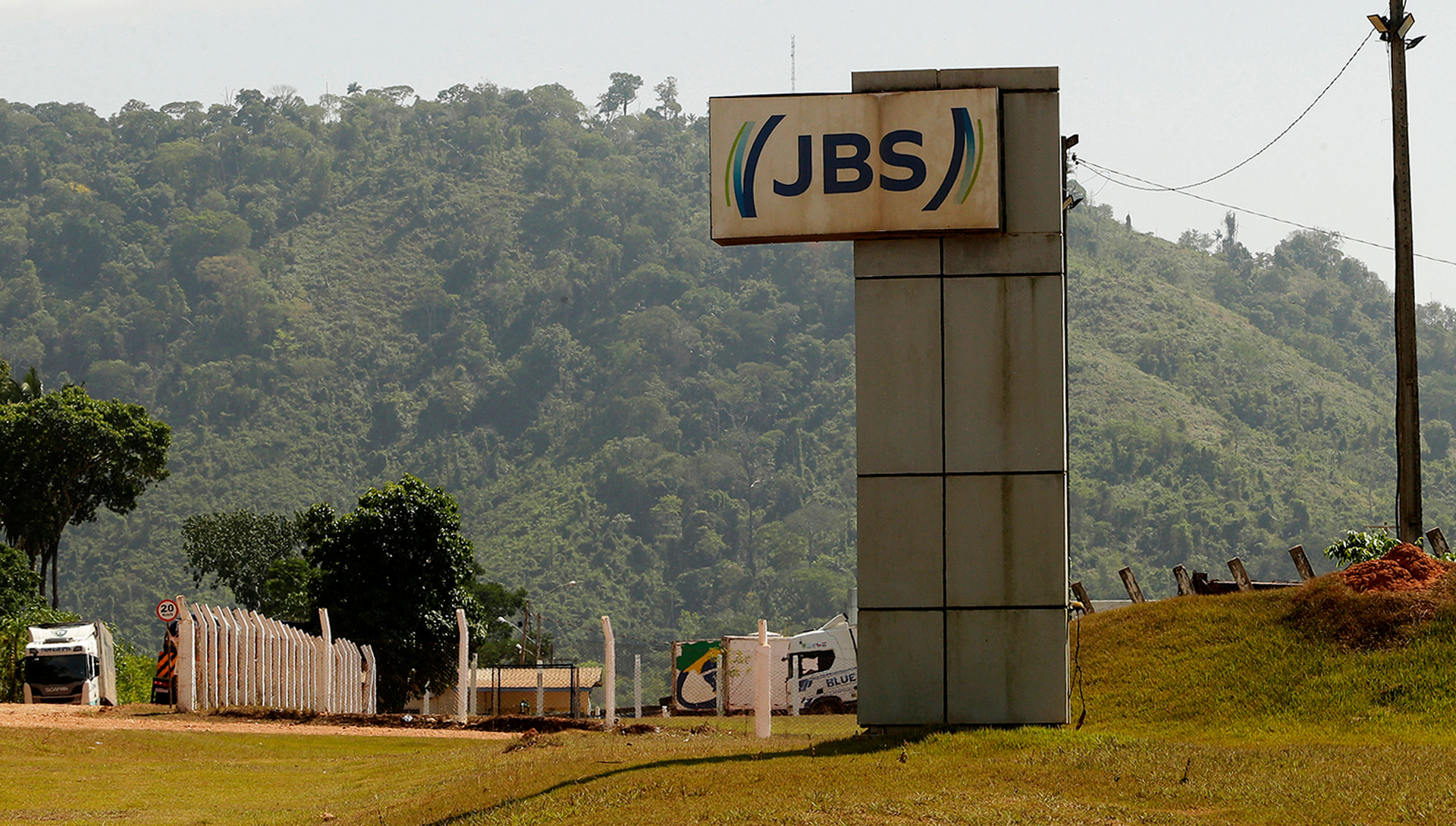
The silence of the afternoon is broken by a truck crammed with animals on their last day of their lives. From above, they can be seen, squeezed in like sardines, their white hides contrasting with the orange soil as the truck parks in front of the JBS meat processing plant in Tucumã, in the south of the state of Pará.
Before being slaughtered, a bull can weigh up to 700 kilograms. For this living body to be turned into good-quality meat, the animal must not be stressed in its last moments of life. This is why, after getting down from the truck, the cattle are taken to corrals where water jets rinse them to keep them cool and wash away the dirt and feces accumulated on their journey: this spray bath is considered an industry best practice.
After being washed, protocol requires the cows to be led in single file, calmly, without any commotion, to the stunning pen. There, they will be shot in the head with an air gun to deactivate their cerebral cortexes and stop them from feeling pain—another industry best practice. Next, they are hung by their hooves, bled to death, and cut into pieces that are sold to various Brazilian states and countries as far away as Japan, Egypt, Saudi Arabia, Iran, East Timor, the Phillipines, the UAE, and Peru.
That is how things work in the JBS meat processing plant in Tucumã, a city of forty thousand inhabitants in southern Pará that is not only deeply impacted by what happens to the cattle after they arrive at the slaughterhouse, but also what sometimes happens before: deforestation, working conditions analogous to slavery, and invasion of protected areas and Indigenous territories.
In 2009, the Federal Public Prosecutor’s Office began proposing a series of agreements to meatpacking companies under which the companies would commit to only procuring cattle from farms that fully comply with environmental laws. Under the terms of the Conduct Modification Agreement on Meat, signed by JBS, its meatpacking plants, such as the one in Tucumã, are not allowed to make purchases from farmers who deforest the Amazon, encroach on Indigenous Territories, or subject their workers to degrading conditions. This JBS facility, which opened in 2010, is also one of the company’s “Green Offices,” a program that helps suppliers bring their farms into compliance with environmental regulations.
But a new investigation, which analyzed the facility’s entire chain of direct and indirect suppliers over a three-year period, uncovered a different story.
At SUMAÚMA’s request, the Center for Climate Crime Analysis, an organization specializing in forest crime data, in collaboration with the Brazilian investigative journalism and research organization Repórter Brasil, examined three sets of records that track the journey cattle take to the meat-processing plant. These records are known as animal transit forms. As a result, it was possible to map the supply chain that served the JBS facility in Tucumã between January 2022 and June 2025. During this period, 380,505 animals were sent to the meatpacking plant by 1,223 different suppliers, an average of 298 animals per day. The information from these farms was cross-referenced with data from Prodes, a program that calculates deforestation in the Amazon and uses satellite imagery to verify forest destruction.
The result is that, from 2008 (one year before the company signed the Conduct Modification Agreement on Meat) to 2025, the Prodes system found 12,900 hectares were deforested in the areas of Tucumã where farms that sold cattle to JBS are located, an area larger than Paris, France. From 2013 to 2025, the rate of tree destruction slowed; but even so, an area equivalent to nearly the entire city of Olinda, Pernambuco, was deforested. It cannot be said with certainty that deforestation occurred exactly during the period when the ranches were supplying cattle to JBS, but the data illustrate how the meat industry’s operations contribute to deforestation and the global climate crisis.
The analysis also strengthens the findings of the organization AidEnvironment, produced at the request of the Transnational Legal Coalition, and disclosed on November 5 in eight complaints filed in the United Kingdom, Ireland, Germany, and the Netherlands. AidEnvironment points out that “deforestation in the Amazon has exploded” in all areas where JBS operates meat-processing plants—there are 21 of them in five states: Acre, Pará, Mato Grosso, Rondônia, and Tocantins. According to an analysis by the Dutch NGO, JBS may be linked to more than 6.5 million hectares of deforested land in the Brazilian Amazon between 1988 and 2026. And at least 83% of the 3,329 properties that supply cattle directly to the multinational company have been involved in incidents of deforestation. This was observed in 55% of the 9,247 indirect suppliers. Like the Center for Climate Crime Analysis, AidEnvironment also evaluated the animal transit forms from JBS meatpacking plants and cross-referenced them with deforestation data since 1988.
The data collected by the Center for Climate Crime Analysis reveal some concerning cases of individual farmers.
The primary supplier to JBS in Tucumã was found guilty of occupying land in an Indigenous Territory. Another individual was blacklisted for using forced labor and fined millions of reais for deforestation in a national park. According to the Federal Public Prosecutor’s Office, a third individual built his fortune by purchasing cattle raised illegally on Indigenous land and then selling them to JBS from his “clean” ranch, located outside the invaded area—a practice known as “cattle laundering.”
When contacted by SUMAÚMA, JBS claimed it had blocked some of these suppliers after discovering irregularities on their farms. “JBS monitors 100% of its direct suppliers in the Amazon using high-resolution satellite imagery and cross-referencing information from official databases,” the multinational wrote. But what SUMAÚMA’s analysis reveals is that, to circumvent the company’s monitoring, farmers move cattle between different properties, clearing the animals’ path to the meat-processing plant—a problem that JBS should also be able to detect.
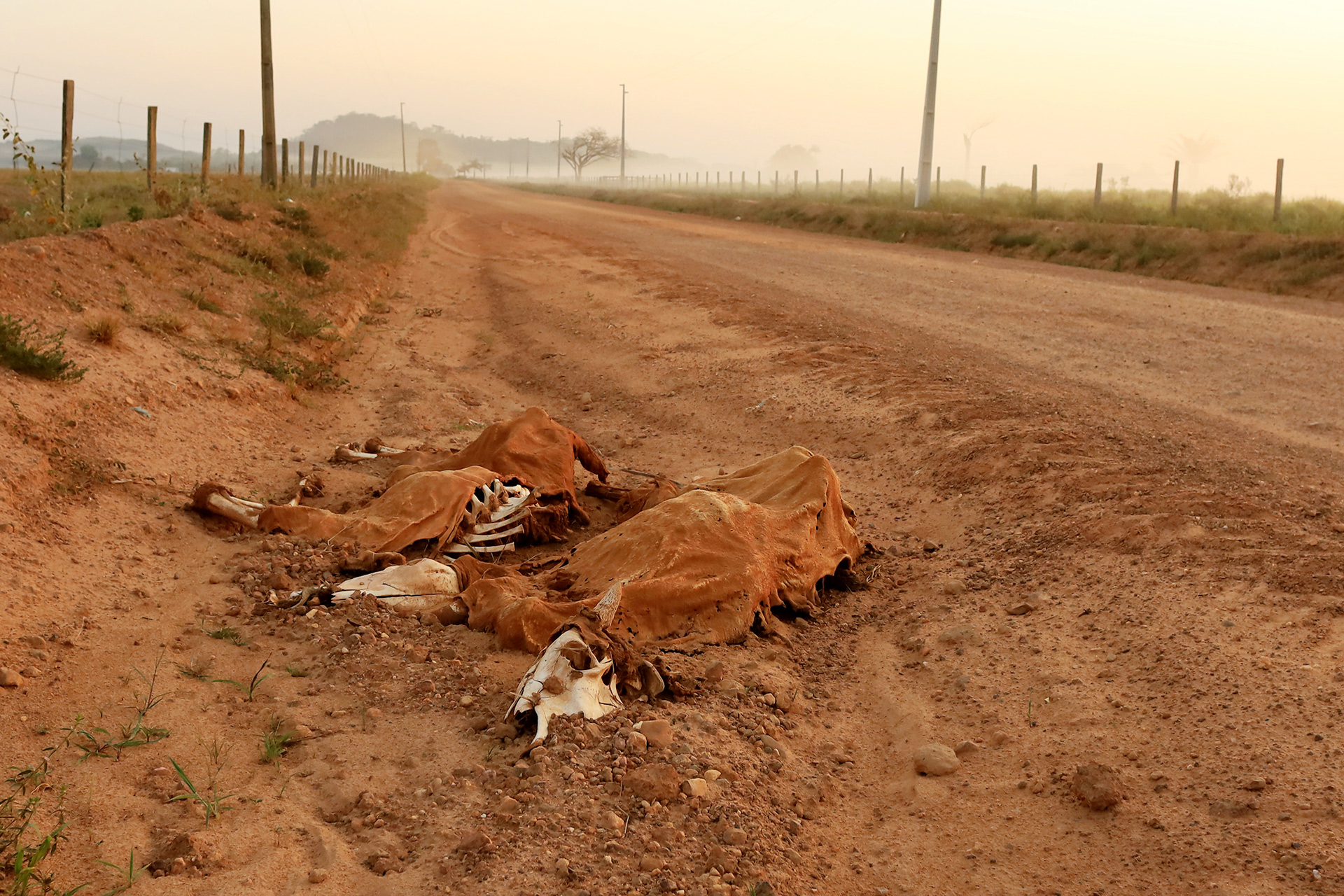
By doing business with the meatpacking plant owned by brothers Wesley and Joesley Batista, these men are amassing land, concentrating wealth, and transforming an ever-expanding swath of the southern Amazon into pastureland to feed cattle. Any traveler who ventures along the roads of southern Pará can see the result: where there used to be forest, there are now vast grassy plains, smoke, and cattle carcasses abandoned on the side of the road.
On Thursday, November 5, the Transnational Legal Coalition, a group comprising five international organizations, including King’s College—a partner of SUMAÚMA in the “Unsustainable” series—will file complaints against 11 finance banks, service providers, and investment funds linked to JBS in four European countries, the United Kingdom, Ireland, Germany, and the Netherlands, based on European anti-money laundering legislation. One of the banks named in the complaint is Banco do Brasil, which has a branch in the United Kingdom.
The Transnational Legal Coalition lawsuit is based on the premise that, if JBS is making deals for cattle raised in an illegal manner (such as on land cleared without authorization or in Indigenous Territory), it would mean JBS is profiting from an illegal product, which would constitute money laundering as defined by legislation in those countries.
Furthermore, according to European law, TLC argues, financial institutions that lend money to JBS are allegedly failing to comply with the obligations put in place by anti-money laundering legislation when they do business with the Brazilian meatpacker.
After visiting three cities in southern Pará, SUMAÚMA contacted the attorneys for three landowners who are on the list of JBS’s largest suppliers in Tucumã, all of whom have been cited for environmental and labor violations by deforestation monitoring systems or official agencies, such as the Public Prosecutor’s Office and Funai. While the attorneys said they would contact their clients, their clients had not responded by the time of publication.
Sebastião Pé de Cobra
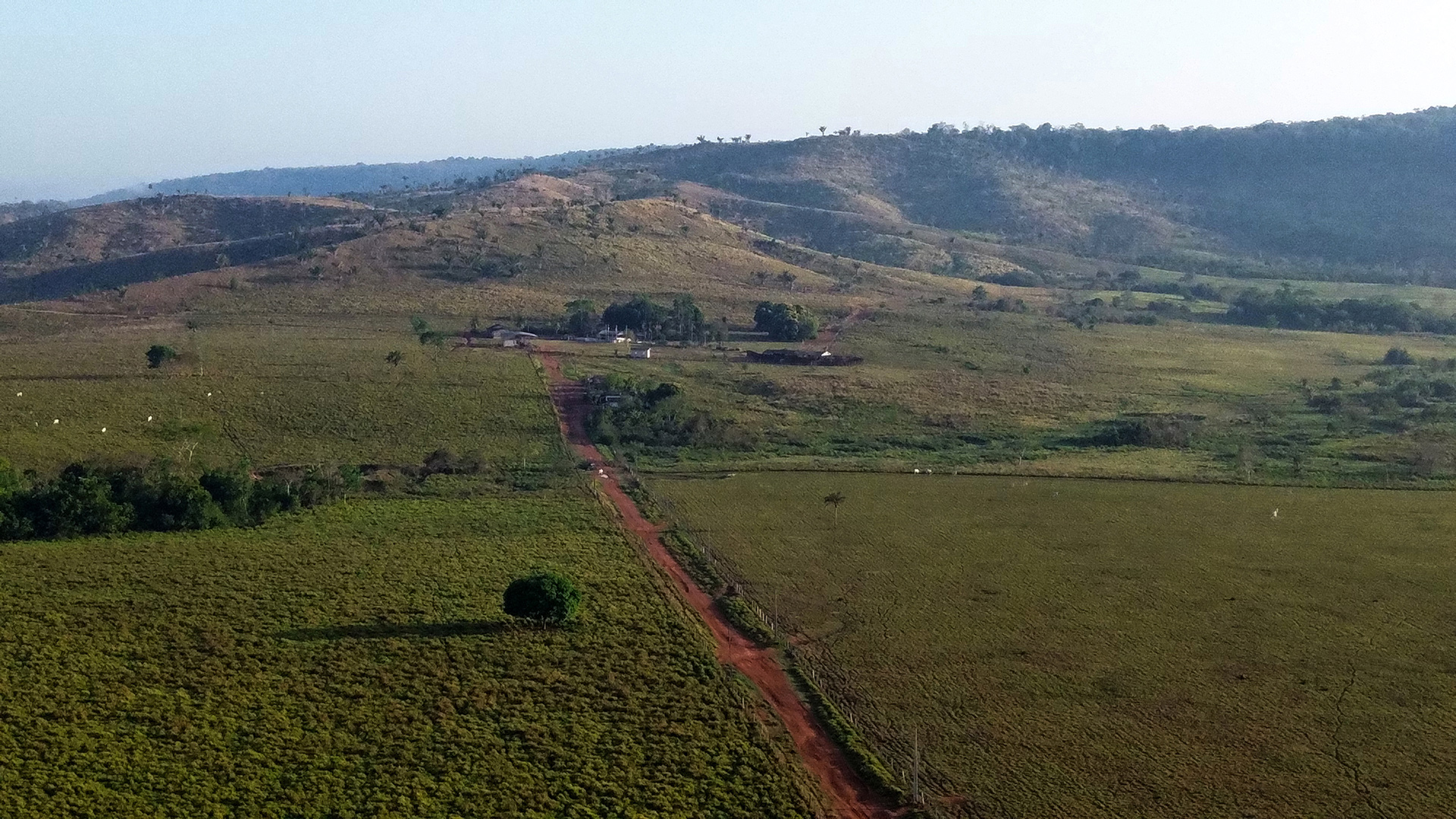
Cattle graze peacefully on the steep slopes of Chácara Estrela, a farm adjacent to the Tucumã meat-processing plant north of the city. “Chácara” is the term for small rural properties, generally used by their occupants for leisure and relaxation; in the case of Chácara Estrela, the name seems inappropriate.
According to the Environmental Registry of Rural Properties, this property has 320 hectares, an area equivalent to 448 official Fifa association football fields. On paper, it belongs to one Marilene Lopes; but the general sentiment when talking to people in the city is that the real owner is Marilene’s husband: Sebastião da Silva Lopes, better known as Sebastião Pé de Cobra. The 69-year-old from Dueré, Tocantins, is a prominent figure among Tucumã’s cattle ranchers—so prominent, in fact, that the city’s Agricultural and Livestock Exhibition Park was named after him.
Between 2022 and 2025, Chácara Estrela sold 2,045 head of cattle to its neighbor, JBS, a number that placed it among the business’s top suppliers in the region. At first glance, everything seems above board in the relationship between the farm and the meatpacking plant, two properties that can be seen from anywhere in the city. Yet the situation changes following an examination of the path taken by cattle before they reach Tucumã.
One of the ranches that supplies animals to Chácara Estrela is called SMG; it covers 2,331 hectares and lies 67 kilometers from Tucumã. Located in a hard-to-reach area, accessible only by small side roads winding through the forest, SMG is owned by Agropecuária Três Poderes, which in turn is owned by Sebastião Pé de Cobra and his wife. SMG has in the past been on the Ministry of Labor’s list of labor violations. In 2013, Sebastião Pé de Cobra was put on a forced labor blacklist after violations were found at SMG.
Apart from SMG, the rancher owns another large farm, Uberama. Between 2019 and 2026, the website MapBiomas issued 17 deforestation alerts in Uberama, totaling 58 of the farm’s 2,957 hectares. MapBiomas issues alerts based on visual inspections of satellite imagery but does not determine whether deforestation is legal or illegal.
Fifty-eight hectares might be considered a negligible amount of deforestation if you compare it to the disaster attributed to Pé de Cobra in the Serra do Pardo National Park in the early 2000s. This region, located between the municipalities of Altamira and São Félix do Xingu, is home to endangered species, such as the blue macaw, a bird that lives in the large rubber trees lining the Pardo River. That was where, decades ago, Pé de Cobra settled and decided to establish the Santa Maria farm. In doing this, he destroyed 3,612 hectares of native Amazonian forest. The hardwood was sold and he planted pastures on the dead land for his 12,000 head of cattle.
The destroyed area is equivalent to 5,000 association football fields, or to the municipality of Guaratinguetá, São Paulo.
During proceedings on the public civil action filed by the Federal Public Prosecutor’s Office, the rancher admitted to the deforestation but said it had occurred before Serra do Pardo National Park was created in 2005 and was therefore not illegal. The federal court rejected the argument and, in 2025, ordered him to pay more than 670,000 dollars in fines and collective nonpecuniary damages. Sebastião has not paid and is still appealing the ruling.
While defending himself in that case, he used another ranch from his extensive inventory of properties to sell cattle to JBS in Tucumã. Over a four-year period, from 2022 to 2025, the Três Poderes ranch sent 783 cows to the meatpacking plant. In 2025, the Prodes, the National Institute for Space Research’s system for monitoring deforestation by satellite, also found just over nine hectares of forest area that had been cleared at Três Poderes, a small fraction of all the deforestation historically perpetrated by one of the largest suppliers to the Batista brothers’ JBS processing plant.
In a statement, JBS confirmed Sebastião is a supplier. “JBS ensures all business with Chácara Estrela is done in accordance with the “Beef on Track” Protocol and the company’s responsible sourcing policy. The SMG farm has been blocked. Uberama was never part of JBS’s supplier base.”
On Friday, October 30, SUMAÚMA spoke via video call with attorney Delson Júnior, who represents Sebastião. The attorney said he would speak with his client. Two days later, we contacted him again and left a message with his secretary. However, the attorney had not returned our call by the time by the time this article was published.
Moisés Cândido and Las Casas
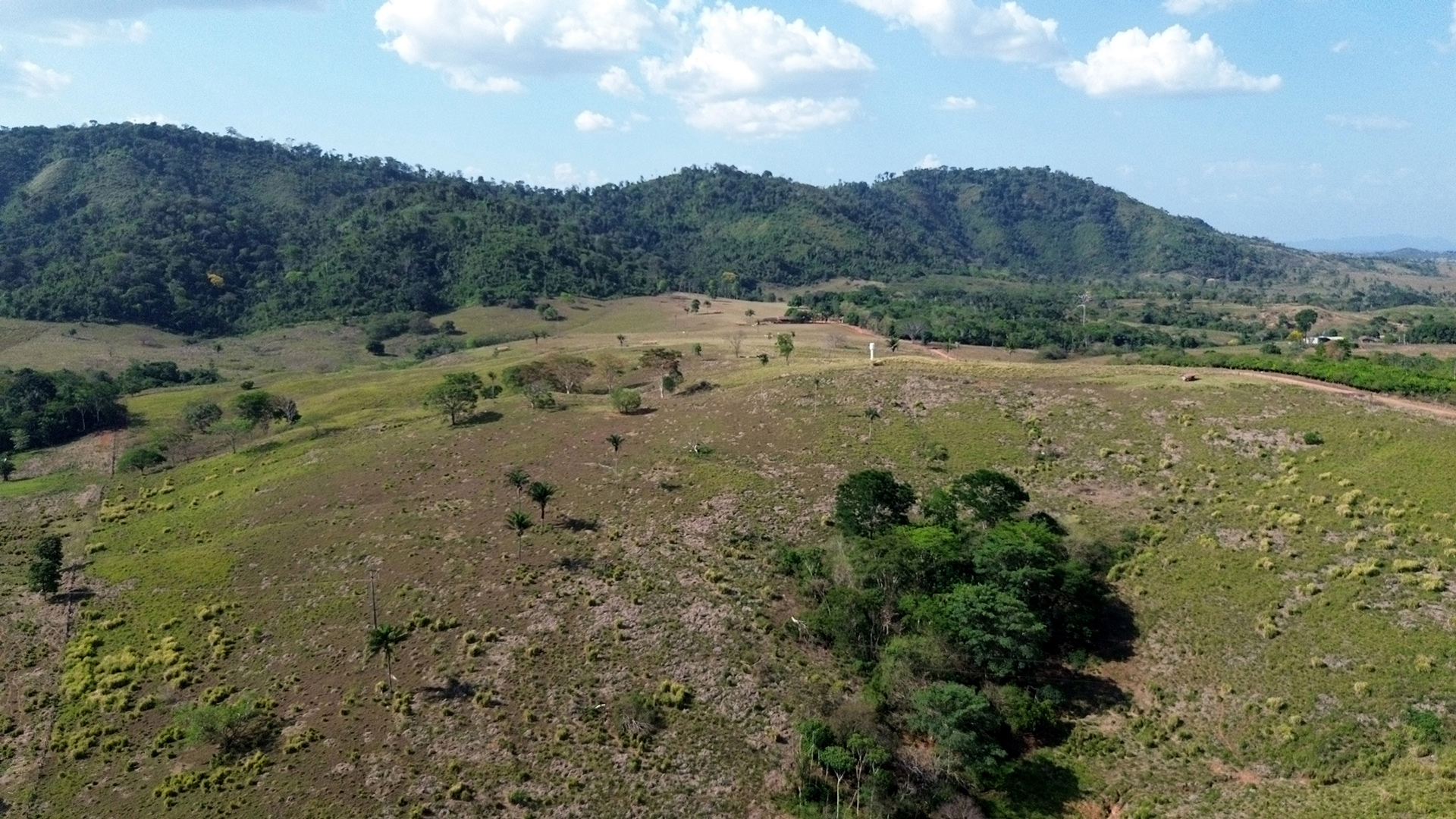
The rotten carcasses along the road lend a feeling of morbid ruralism to the landscape in São Félix do Xingu. This is Pará’s agricultural capital, the municipality with the largest cattle herd in Brazil, where more than 2.7 million head of cattle graze on plains once covered by forest. In this sprawling semi-arid landscape that stretches beyond the horizon sits Fazenda Sumaúma, JBS’s largest supplier in Tucumã. It is from here that 8,336 animals were taken 90 kilometers to be turned into meat in the neighboring town.
Part of the ranch is located within an undesignated public forest, a type of environmental protection area that prohibits land from being used for agriculture, except in very limited cases. Moisés Cândido da Silva, the owner of Fazenda Sumaúma, owns 12 other rural properties in Pará alone. During fattening, the cattle move between these properties and eventually arrive at Fazenda Sumaúma before being sold to JBS. One of the farms they move through is Candeias, located in the municipality of Redenção, also in Pará.
That is where JBS’s largest supplier crosses paths with a community of Mẽbêngôkre—also known as the Kayapó people—who inhabit the Las Casas Indigenous Territory, an area ratified in 2009.
At the “Casa do Guerreiro,” a gathering place for residents in the center of the village, cacique Paulo Tàkàkroti Kayapó recalls the year 1996, when his family decided to put an end to a disagreement with relatives in the Kayapó Indigenous Territory by setting out on a journey eastward in search of a new home.
They decided to found a new village on a piece of land that had been occupied by their ancestors at the beginning of the century, some of whom had been killed in attacks by white people. The landscape was different from the one they were used to: the vegetation typical of the Cerrado does not have the fruits and vegetables they ate in the dense, humid forest of the Kayapó Indigenous Territory 134 kilometers away. The hard, dry land made growing crops difficult. Hunting was limited to small animals, such as parakeets and armadillos, but at least there were fish in the Pau D’Arco River, which meanders through the low scrubland.
The residents of Las Casas built their homes and the basic infrastructure needed for survival with support from Indigenous affairs agency Funai and as part of the Protected Forest Association—an organization led by the Mẽbêngôkre to defend their territory. But the 465 inhabitants depend on social programs from the government. “It’s pretty difficult to plant, because the soil is hard and we need support to work the land and grow our food,” said cacique Paulo Tàkàkroti.
Their situation stands in contrast to that of their neighbors, white men who have grown wealthy through an activity the Mẽbêngôkre do not practice: cattle ranching. One of these neighbors is Moisés Cândido da Silva, owner of the Candeias ranch, which borders the Indigenous Territory and from which 72 head of cattle were shipped, in June 2025, directly to Fazenda Sumaúma, a supplier to JBS. From there, the animals were sent for slaughter at JBS.
Candeias put Moisés at the center of a conflict with Funai, which accuses him and nine other farmers of illegally occupying territory that belongs to the Mẽbêngôkre. In his defense, Moisés claims Canadeias is outside the area of the Indigenous Territory. But in April 2026, federal judge Athos Alexandre Câmara Attiê ruled in favor of Funai and authorized the use of police force to clear the area on behalf of the Indigenous people, while also ordering the payment of compensation to landowners who had made improvements to the property. This has still not been done.
Procurement of cattle from ranches located on land that infringes on Indigenous Territories is one of the prohibitions in the Conduct Modification Agreement on Meat signed by JBS in 2009. Moisés raises cattle in Candeias, but in September of this year during a visit to the region, SUMAÚMA was denied access to the farm to verify whether the animals are entering the Indigenous Territory.
Led by cacique Paulo Tàkàkroti, the Mebêngôkre Indigenous people keep watch over the borders of Las Casas Indigenous Territory. Photos: Raimundo Paccó/SUMAÚMA
In a statement to SUMAÚMA, JBS said Fazenda Sumaúma and Fazenda Candeias have been blocked as suppliers to the company. However, the company did not say when the block was implemented.
On Thursday, October 29, SUMAÚMA reached out to Moisés, through his lawyer Carlos Godoy Peres, who is representing him in the lawsuit regarding the Las Casas Indigenous Territory. The attorney said in a WhatsApp message that he would try to contact his client. SUMAÚMA sent another message on Tuesday, November 3, but the lawyer had not replied by the time this article went to press.
The earnings Moisés makes from his cattle business have concentrated more land in his and his family members’ hands. They now own a complex of ranches in the São Félix region, along the Xingu River. He also expanded into another highly profitable sector: fuel. He owns one of the gas stations in Redenção.
As for cacique Paulo Tàkàkroti, he has no intention of entering into a conflict with his neighbors. He would, however, like his people to have open access to the forests and rivers where they could hunt and fish as they used to, something that has been chipped away as more and more cattle ranchers arrive in the region.

The colonization that transformed the Amazon
The first cattle arrived in Pará as early as the 17th century through the ports of Belém and Marajó, but the large influx that enabled the state to establish itself as a powerhouse in extensive cattle ranching would not occur until the second half of the 20th century, thanks to the military regime’s efforts to colonize the Amazon.
The occupation of southern Pará, which concentrated a great deal of land in the hands of a few people, is the work of the military, carried out by large national and international companies that profited from the exploitation of the land and timber. In the 1970s, technical staff working for the Minas Gerais-based construction company Andrade Gutierrez surveyed the region from the air and marked out boundaries from above that later became the lines of the Tucumã Project: 400,000 hectares of Amazonian land privatized and granted to the company for colonization.
At the very end of the PA-169 Highway, Andrade Gutierrez divided the land into parcels, fenced off the area with chain-link fencing, and placed advertisements in newspapers in the south and southeast to attract buyers to a remote region. “A new Brazil is emerging in southern Pará,” read a pamphlet promoting the project in 1981, promising that Tucumã would have “three cities and sixty urban centers, schools, hospitals, water and power systems, bus stations, airports, agricultural research centers and cooperatives.” The size of land parcels varied depending on how the buyer intended to use them: the largest and most expensive ones, up to 600 hectares, were used for livestock farming.
The Tucumã Project proved to be a source of real estate speculation for Andrade Gutierrez, who paid the federal government 87 cents on the dollar per hectare while managing to sell some of the land for as much as 87 dollars per hectare, raking in a profit of nearly 10,000% in those cases—far above the 14% initially projected.
Most of the settlers came from states in the south of Brazil, like Paraná, since they were the only ones with enough capital to buy such expensive land. While other migrants who came from Pará and the Northeast region were drawn by Andrade Gutierrez’s advertisements, they were turned away at the security checkpoint the company had set up at the entrance to Tucumã, a town that was surrounded by chain-link fences at the time. Lacking the funds to purchase a parcel of land, these settlers attempted on several occasions to trespass onto the company’s property and were forcibly removed by private security guards, often with the support of the Federal Police, according to historians Antonio Ronaldo Alencar and William Gaia Farias, of the Federal University of Pará.
Poor migrants turned to the other lucrative activity in the region: gold and cassiterite mining—or even prostitution catering to the illegal miners. The urban and rural centers they founded would later become the municipalities of Ourilândia do Norte and Bannach, also located along the state highway.
Unable to attract buyers for all the parcels and unwilling to lower the price, Andrade Gutierrez did not invest in the region’s infrastructure as it had promised. Just a few years after it started, the Tucumã Project was already showing signs of failure, but the company found another source of revenue for its capital: the sale of mahogany from the forests it controlled.
In 1988, after Brazil’s return to democracy, Andrade Gutierrez left Tucumã, but not before negotiating compensation, paid by the federal government, of 4.4 million dollars for the “improvements” it left behind: “termite-eaten wooden houses, impassable local roads, and serious social problems” caused by conflicts over land ownership in the region, according to Antonio Ronaldo Alencar and William Gaia Farias.
SUMAÚMA reached out to Andrade Gutierrez’s press office for comment on the history of the Tucumã Project, but did not receive a reply.
Mining and cattle ranching remain the region’s main economic drivers. And the region still bears the marks of the colonization carried out through a partnership between the government and big money to exploit the Amazon’s soil and subsoil. In Ourilândia do Norte, for example, Vale has built the world’s largest nickel mine, the Onça Puma Project, which produces 40,000 metric tons of nickel ore per year. And in Tucumã, the most powerful ranchers are still those who came from southern Brazil, who sell most of their livestock to a company that set up operations in the region with decisive support from the federal government: JBS.
Cattle laundering in Apyterewa
In the second week of October 2026, the leaders of the Indigenous Parakanã people watched as their phones filled with threats. Voice messages sent by cattle farmers announced their intentions to invade the Apyterewa Indigenous Territory, also located in São Félix do Xingu, after they had been removed by court order.
Following the removal of these invaders, the Parakanã had begun a process of taking the land back, reestablishing villages to again occupy the territory they had lost under pressure from the pastures. It was a process filled with ups and downs, advances and retreats, always under threat from the ranchers who were trying to recover the land they had lost.
The ranchers’ messages now announced that a date had been set to invade the Indigenous Territory: October 25, the same day as the runoff vote in the presidential election.
The cattle farmers were feeling hopeful as they looked toward the political horizon taking shape with the rise of the extreme right: after the first round of voting on October 5, senator Flávio Bolsonaro held a comfortable lead over president Lula. And Bolsonaro’s ally in Pará, Daniel Santos, had been elected governor with over 50% of the vote, exempting him from runoff voting.
The Indigenous peoples reported the case to the press, and according to a story in the Folha de S.Paulo newspaper, the federal government’s intelligence agencies were monitoring the threats. A Federal Police agent found the audio messages “concerning.”
Today, Apyterewa is a territory under siege, the stage of a bloody dispute between the encroachment of livestock farming and traditional communities’ rights to live on their land.
And the presence of JBS, along with other meatpackers in the region, seemingly feeds this conflict. By procuring cattle raised and fattened on land located within Indigenous territory, JBS makes this illegal activity very lucrative.
The company does not make direct purchases from farms whose products come from Apyterewa, since this would violate the Conduct Modification Agreement on Meat. Yet it does do business with intermediaries who purchase cattle raised in the Indigenous Territory. Such is the case of Antônio Neto Alves Ferreira and Marilene Marques de Carvalho, a couple who own the Sítio 02 Irmãs farm, located in the Taboca district bordering Apyterewa Indigenous Territory.
The farm covers 70 hectares, 46 of which have been turned to pastureland. This classifies it as a small property, at least in comparison to the standard for extensive livestock farming in the region. Nevertheless, Sítio 02 Irmãs has sold no less than 47,660 head of cattle in the last ten years to nearby meatpacking plants, including four JBS units, like the one in Tucumã. This level of productivity is absolutely unheard of in livestock farming. An area’s livestock productivity is calculated based on a proportion of the number of animals produced, the size of the land where they are raised, and a measure of time, which is one year in this case.
According to a technical report by the Federal Public Prosecutor’s Office, the Agricultural Defense Agency of Pará considers that livestock productivity in the state can reach up to 1.5 animal units per hectare per year. In other words, each hectare in Pará produces one and a half cows, at most.
According to the information stated by Antonio Neto and Marilene Carvalho, the couple’s farm produced 156 animal units per hectare in 2022 alone, 100 times the maximum projected by the Agricultural Defense Agency of Pará. The prosecutors who looked into the case were alarmed by this anomalous proportion and began to investigate where these animals came from before arriving at the couple’s farm.
A portion, 3,723 cows to be precise, purportedly arrived directly from 27 farms overlapping Apyterewa Indigenous Territory. These farms were invading the Indigenous Territory and since they could not sell directly to the meatpackers, they allegedly used the documents of a farm outside of the Indigenous Territory to close the deal.
According to the Federal Public Prosecutor’s Office, Sítio 02 Irmãs is an excellent illustration of how cattle laundering works, duping the mechanisms created to prevent illegal cattle sales. In August 2024, federal judge Carlos Gustavo Chada Chaves issued a ruling that blocked 2.1 million dollars in assets belonging to the couple, while ordering their cell phones be searched and seized and cattle sales be suspended. And in November of that same year, the Federal Public Prosecutor’s Office asked the courts to order the couple to pay 2.6 million dollars to the Parakanã for buying and selling cattle raised illegally in the Indigenous Territory. This motion has yet to be considered.
In their defense, Antonio Neto and Marilene Carvalho admitted to doing business with farms overlapping the Indigenous Territory, but claimed it was not their role to determine whether these products were or were not illegal. Their attorney, Gustavo Oliveira Rocha, says his clients are “people with little academic instruction. They have always worked in the field and with cattle sales. They are not aware of details on demarcation, certification, removal of invaders from the Apyterewa Indigenous Territory, or the Conduct Modification Agreement on Meat. Since arriving in the municipality of São Félix do Xingu, […] they have always worked with cattle sales and do not distinguish customers based their on location, since they always believed that if something were wrong or illegal, the Agricultural Defense Agency of Pará would, upon issuing the animal transit form, block the transaction. Which did not happen.”
Our reporters reached out to attorney Gustavo Oliveira Rocha on Thursday, Oliveira 29, to try to get in touch with Antonio Neto and Marilene Carvalho. Their lawyer said in a WhatsApp message that he would speak with his clients. We sent another message five days later, but the attorney had not replied by the time this story was published.
Although the animal transit forms prove that Sítio 02 Irmãs purchased cattle from Apyterewa farms and that this same farm later sold cattle to several meatpacking plants, including JBS, it is not possible to determine whether a specific animal that reached a given meatpacking plant was raised in Indigenous Territory. That is because the path traveled by each bovine is not described on the form, which only contains information for the entire lot. So illegally farmed cattle can be mixed with legal cattle and thus enter the supply chain without leaving any traces.
In September 2024, Pará became the first state in Brazil to announce an individual identification system for cattle where a chip is attached to the animal’s ear, like an earring. The idea, championed by the governor at the time, Helder Barbalho (Brazilian Democratic Movement), was to allow for oversight of the path each animal takes through the territory and therefore fight illegal deforestation in livestock farming. So far, few ranchers have joined the project, alleging that it raises production costs. At the end of 2025, after COP-30 had ended and looking for support from agribusiness for the upcoming elections, Helder extended the deadline mandating that cattle be tagged with this chip to 2030.
Today, nobody in Pará knows if this project will continue, especially because Helder was unable to elect his successor. And also because the governor-elect, Daniel Santos, only won after his campaign criticized environmental agencies like Ibama and ICMBio in relation to livestock activities. In the week after his election, he announced attorney Vinícius Borba as his environment secretary, a man who spent years defending the very same ranchers accused of invading Apyterewa Indigenous Territory.
In a statement, JBS said that it blocked Sítio 02 Irmãs after the Public Prosecutor’s Office released its report on Apyterewa Indigenous Territory.

JBS abandons emissions reduction target
If every pasture in the Amazon were to form a country, it would be the size of Spain. Pastureland covers 508,000 square kilometers, which includes forests, wooded areas, fields, plains, lands belonging to traditional communities, the banks of rivers and streams, and the homes of living and non-living beings – over 12% of all the territory in the Amazon – that has been converted into cattle fodder, according to the MapBiomas platform.
Livestock farming’s contribution to deforesting the world’s largest tropical forest is not new. The industrial production of increasingly larger herds is the cause and the consequence of expanding meatpacking businesses like JBS. Founded in the 1950s in Goiás as a family butcher shop, the company became the world’s biggest producer of meat and has consistently benefited from its proximity to the government and from an aggressive strategy of mergers and acquisitions.
Like every giant of capitalism, JBS needs to eternally expand and constantly race to grow and create new markets for its products. In September 2026, the company announced the creation of Genu-In Solutions, a company that develops high-protein foodstuffs, like yogurt and creamy requeijão cheese, and beverages, like water and beer.
Because the raw material used in this new business is the collagen and gelatin taken from cattle hides, if the growth being forecast for this market becomes a reality, the company’s plants will need more animals, making it even more lucrative for livestock farming to push into new territories.
The environmental impact of raising livestock goes beyond deforestation. Bovine digestion produces methane, one of the main greenhouse gases. More cattle cause more heating and make the consequences of the climate emergency even worse.
In 2021, like many companies, JBS announced that it would make efforts to eliminate its emissions. Yet in July of 2026, the company shared that, in contrast to what it had promised, its global emissions climbed to 191 million metric tons, 22% more than the year before.
These emissions, which include the entire JBS supplier and customer chain, are also known as Scope 3 emissions. On the same day this announcement was made, the company said it was abandoning its goal of eliminating Scope 3 emissions, claiming it was impossible to control its suppliers. Its new environmental goal includes eliminating only Scope 1 and 2 emissions, which account for 3% of the impact of its entire production chain.
The company says it is taking concrete steps to avoid doing business with suppliers who deforest; oversight agencies identify any irregularities and activists organize to report alleged failures by the company. Yet most of the illegal ranching done in the Amazon continues to use a wide variety of methods to circumvent any attempt at control.
As you are reading this report, another truck filled to the brim with animals headed for slaughter is pulling up to the Tucumã meatpacking plant. And nobody will be able to say for certain how many environmental crimes were committed on the way there.